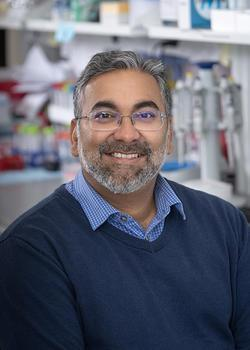
Congratulations to Dr. Chitnis on his well-deserved promotion to full professor!
The overarching objective of Dr. Chitnis’ research is to sense, image, and modulate physiological function using light and ultrasound. He is one of the Principal Investigators in the Applied Biosensing Laboratory (ABL). He leads a multidisciplinary team of scientists and students that conducts basic science and translational research at multiple length scales spanning from single cells to small animals and to human subjects for understanding physiological function, studying progression of diseases, and developing new biomedical technologies.
Dr. Chitnis will be a guest speaker this fall at Dresden University of Technology on ultrasound-based assessment of wounds and musculoskeletal injuries.
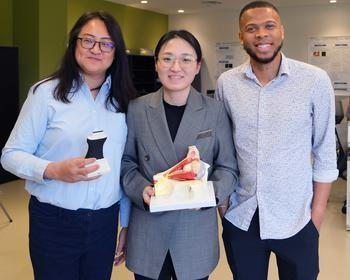
Understanding and treating complex eye movement disorders like strabismus has long been a challenge for clinicians. Now, researchers at George Mason University are pioneering a new approach using robotics and artificial intelligence to engineer a better future for vision care.
Ningshi Yao, an assistant professor in the Department of Electrical and Computer Engineering, has been awarded a prestigious $1.17 million R01 grant to lead a groundbreaking four-year project. The award comes from the joint National Science Foundation (NSF) and National Institutes of Health (NIH) “Smart Health and Biomedical Research in the Era of Artificial Intelligence and Advanced Data Science (SCH)” program.
The funded project, “Study Coordinated Human Eye Movement and Strabismus Using a Novel Artificial Muscle-Driven Robotic Eyes,” will be conducted in collaboration with co-investigators Qi Wei and Quentin Sanders from George Mason’s Department of Bioengineering and consultant Joseph Demer in the Stein Eye Institute at the University of California, Los Angeles.
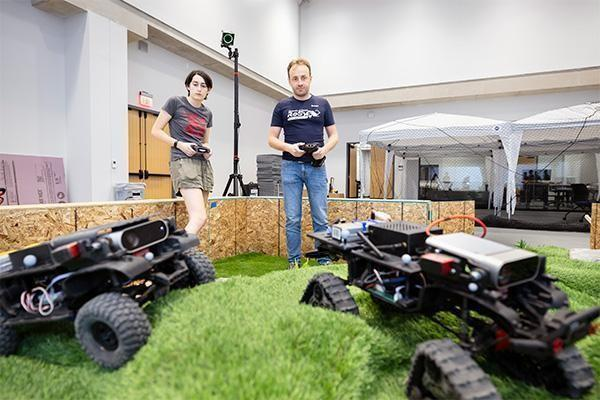
George Mason University’s Department of Mechanical Engineering is leading the way in robotics with the approval of Virginia’s first PhD program in robotics that will launch in fall 2025. On July 10, the State Council of Higher Education (SCHEV) officially approved the trailblazing program that will educate future leaders in the growing field.
Mechanical Engineering Department Chair Leigh McCue and leading robotics faculty across the College of Engineering and Computing combined forces to create the multidisciplinary program that spans mechanical engineering, electrical and computer engineering, computer science, and cybersecurity.
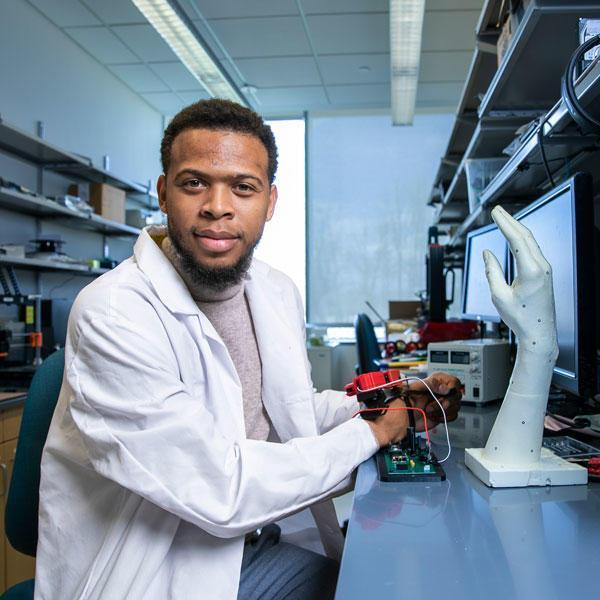
In collaboration with Jonathon Schofield, Garrett Melenka, and Tiphanie Raffegeau, this project reimagines how we design prosthetic limbs for active children. Running blades and sport-specific prostheses empower kids to move and play — but they’re often prohibitively expensive and rarely covered by insurance.
We are excited to share that the CASSBI team was just awarded a $4.65 million NIH grant to further study chronic musculoskeletal pain—the leading cause of disability worldwide. This is the first major project at the center that applies a complex systems perspective to study chronic pain in people, with a specific focus on patients with knee pain.
The project is led by a highly interdisciplinary group of Principal Investigators, including: Siddhartha Sikdar, Secili DeStefano, Kevin Lybarger, William Rosenberger, Ben Lee, Samuel Acuña, and Lynn Gerber. Together, this team includes doctors, bioengineers, biostatisticians, biomechanists, and experts in Artificial Intelligence (AI), Machine Learning (ML), and Natural Language Processing (NLP) — bringing a wide range of expertise to the table.
This project is a culmination of a long-standing collaboration for the CASSBI chronic pain group, and a new collaboration with the University of Wisconsin, Madison, and will use cutting-edge techniques to better understand how and why chronic knee pain and function change over time.
Aligned with the core values at CASSBI, the project will also include the participation of the Chronic Pain Advisory Board composed of patient advocates and community-based practitioners. This project not only marks a major research milestone for CASSBI, but also reinforces the value of combining lived experiences along with clinical, engineering, and AI expertise to tackle some of the most complex challenges in human health.
This grant was funded as part of the HEAL (Helping End Addiction Long-term) Initiative: Understanding Individual Differences in Human Pain Conditions. Funding is through the National Center for Complementary and Integrative Health and the National Institute of Neurological Disorders and Stroke.
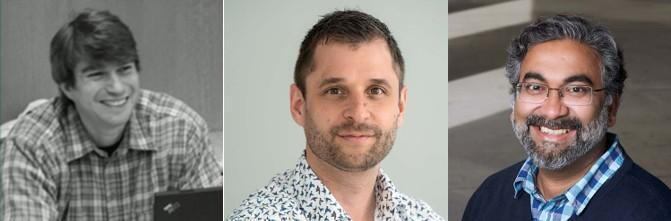
We’re proud to announce that the CASSBI team has received a new multi-year $2.14 million NIH grant to support research into how disruptions in brain cell communication may lead to seizure disorders. The CASSBI core members leading this work include Rob Cressman, Parag Chitnis, and Remi Veneziano.
Cressman, Chitnis, and Veneziano will use novel DNA-based sensors that can detect potassium, along with infrared light imaging, to develop a noninvasive imaging toolkit for studying brain function. Eventually, these tools will allow researchers to observe ionic activity deep within brain tissue — safely and without the need for invasive procedures. The long-term goal is to use these methods to better understand how the brain works in real time and evaluate the effectiveness of potential treatments.
This project is the result of a long-standing collaboration among CASSBI investigators and a new partnership with Photon Etc., an optical imaging company based in Montreal, Canada.
The research team is highly interdisciplinary, bringing together experts in neurobiology, nanomaterials, physics, and bioengineering. The techniques developed in the proposed study have strong potential to be used in real-world clinical settings and for commercialization, thanks to their noninvasive design and safety.
The Center for Advancing Systems Science and Bioengineering Innovation (CASSBI) recently convened its Advisory Board to review ongoing projects and strategic priorities. Board members emphasized the importance of prioritizing initiatives with near-term community impact while also sustaining longer-term research and innovation.
Key discussions focused on improving communication across disciplines, aligning projects with community and industry needs, and developing clearer ways to describe outcomes and solutions. The Advisory Board will continue to guide CASSBI in strengthening partnerships with government, industry, and community stakeholders to ensure that the center’s work has both scientific and real-world impact.
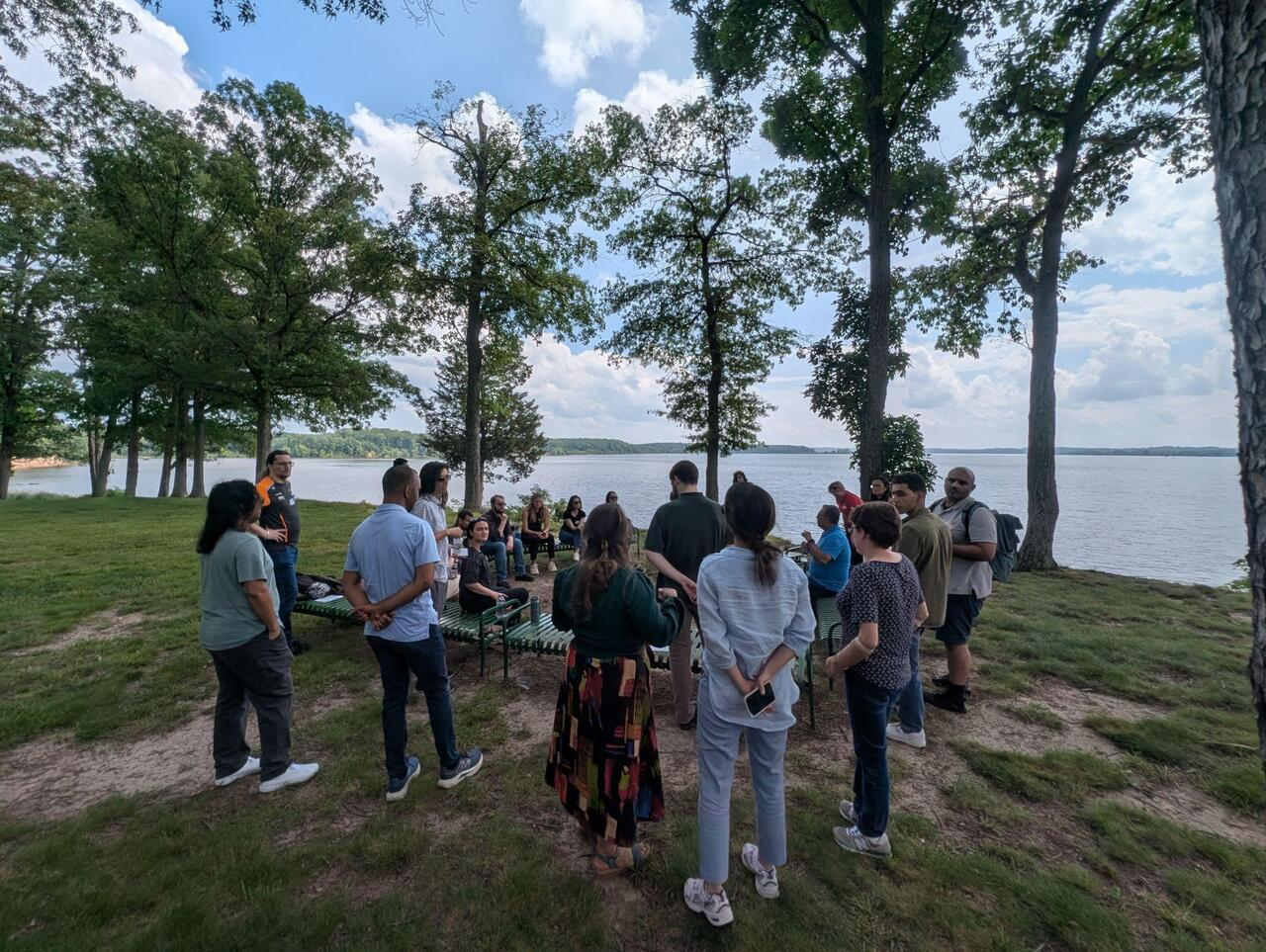
CASSBI held a center retreat in June to share with students and faculty members works-in-progress since the center’s rechartering and kick-off meeting. We spent the beautiful day outdoors at George Mason University’s Point of View park. We are excited to share all of CASSBI’s current and upcoming projects soon.
Shout out to our leadership team: Siddhartha Sikdar, Parag Chitnis, Samuel Acuña, Jenny Mai Phan, Shanelle Highsmith, and Emily Gerson (student representative).